
HERBIXAncient Soil. Modern Magic.
Herb Guide

Oregano Knowledge Base

Oregano is a backbone herb in Mediterranean and everyday cooking. Public evidence for whole-leaf culinary use is more about habit and flavor diversity than high-dose extract trials.
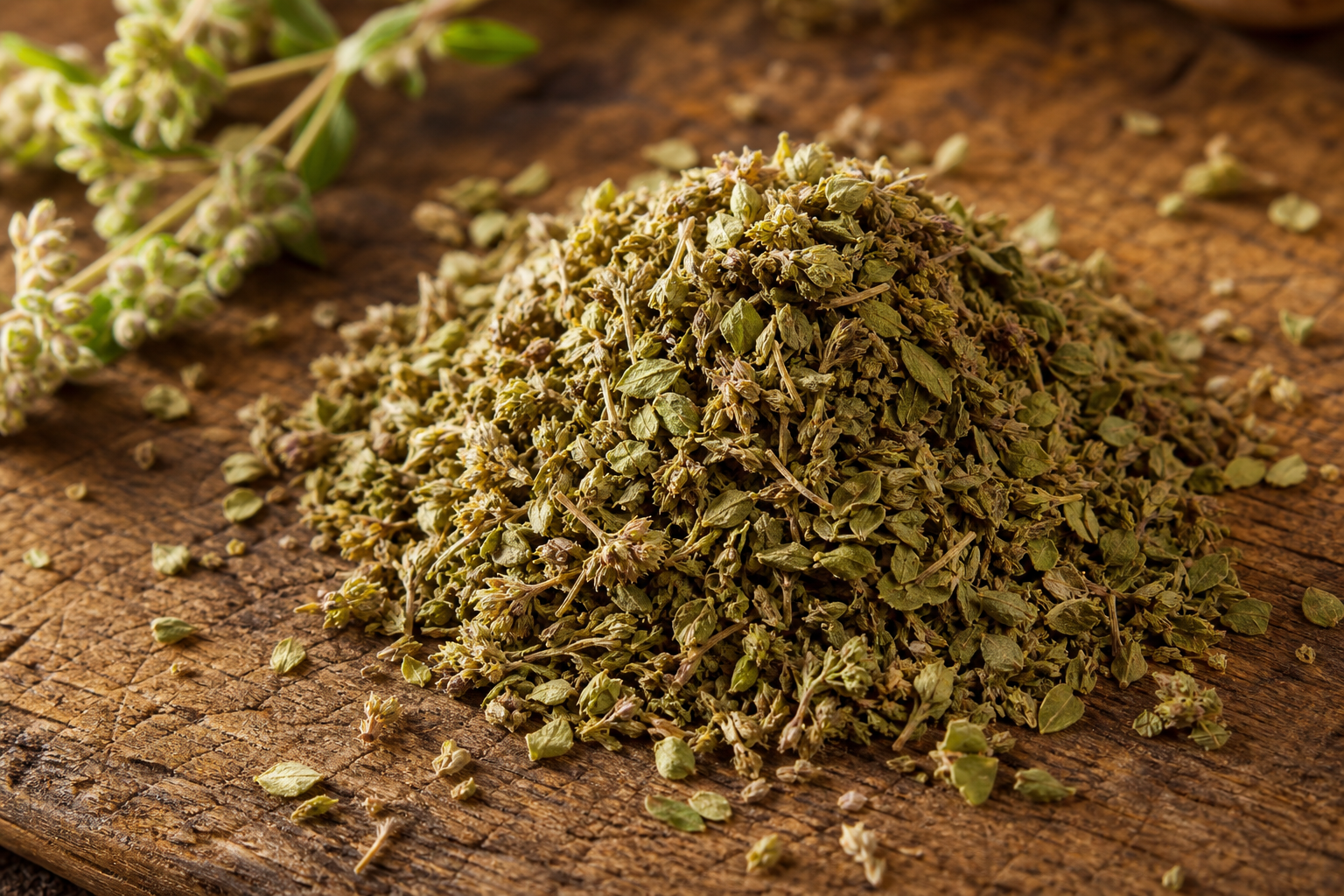
Dried oregano leaves
Latin name
Origanum vulgare L.
Type
Herb
Evidence
Low-Moderate
Flavor
Warm, slightly bitter, aromatic
Best for
Mediterranean savory routines and herb diversity

Key compounds

  • Carvacrol
  • Thymol
  • Rosmarinic acid
  • Monoterpenes
  • Flavonoids

Potential benefits

  • Adds antioxidant-rich herb rotation.
  • Supports adherence through strong savory flavor.
  • Useful in lower-sodium flavor building.

Culinary use

  • Rub into olive oil for dressings and marinades.
  • Finish roasted vegetables, beans, and tomato sauces.
  • Pair with thyme and garlic for slow-cooked dishes.

Safety notes

  • Essential oil is not interchangeable with dried leaf.
  • Sensitive stomachs may prefer smaller amounts at first.

Interactions to consider

  • Concentrated oregano-oil products belong in clinician-supervised contexts, not casual mega-dosing.

Simple routine

  • Typical dried herb: 0.3-1.5 g/day equivalent across meals.
  • Rotate with other green herbs for balance.