HERBIXAncient Soil. Modern Magic.
Herb Guide

Thyme Knowledge Base

Thyme belongs in slow roasts, stocks, and legume dishes. Much published data focuses on essential oil or thymol, not pantry-sized leaf amounts—keep expectations culinary.

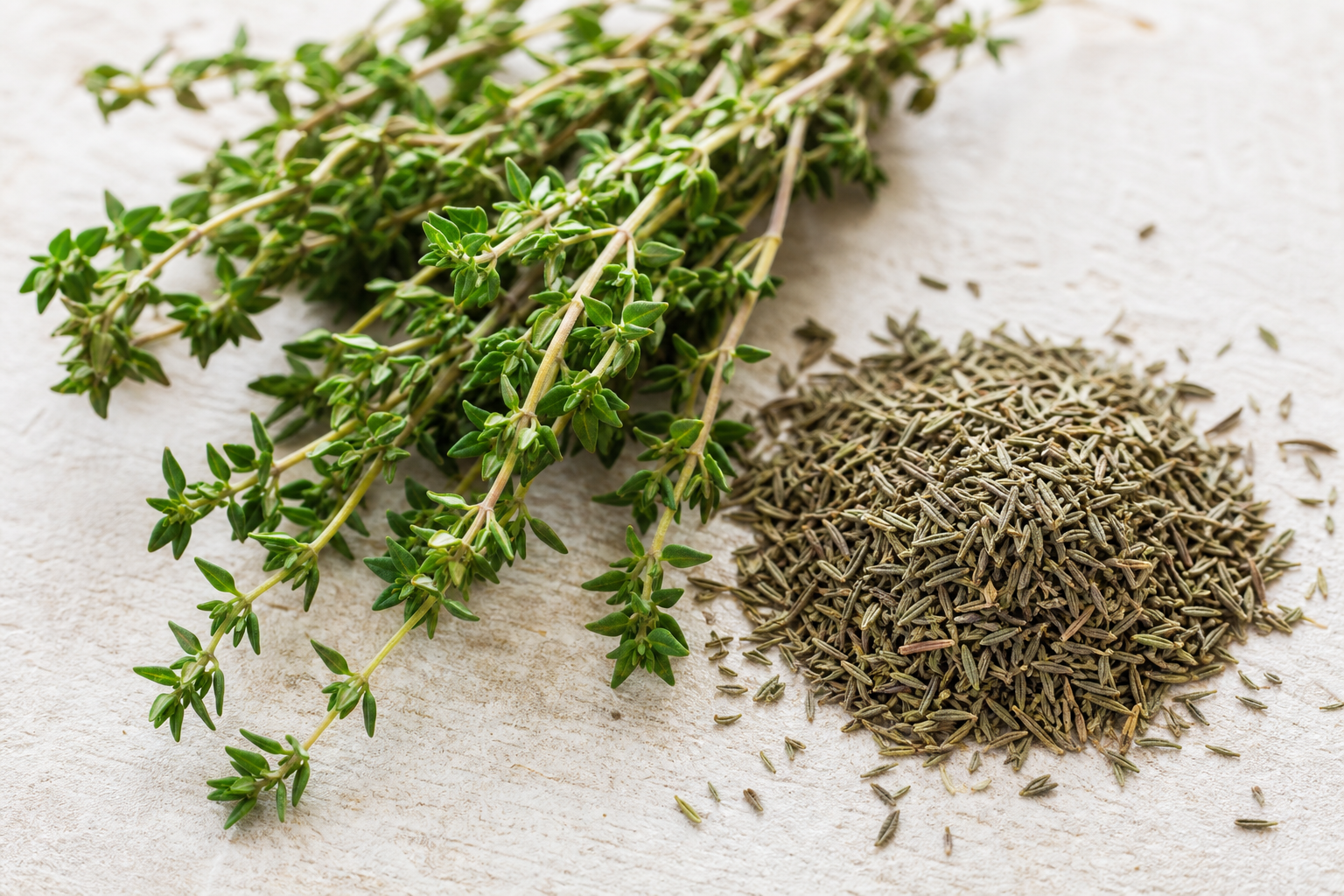
Fresh and dried thyme
Latin name
Thymus vulgaris L.
Type
Herb
Evidence
Low-Moderate
Flavor
Earthy, slightly minty, resinous
Best for
Woody herb accents and rotation variety

Key compounds

  • Thymol
  • Carvacrol
  • Rosmarinic acid
  • Flavonoids

Potential benefits

  • Adds polyphenol variety to weekly herbs.
  • Improves flavor persistence in long cooks.
  • Supports boring-meal fatigue resistance.

Culinary use

  • Strip leaves for soups and stews.
  • Mix with rosemary and garlic for roast rubs.
  • Use sparingly in bean and lentil pots.

Safety notes

  • Culinary leaf is generally safe.
  • Essential oil preparations can irritate skin and mucosa.

Interactions to consider

  • If using thymol-rich products medicinally, discuss overlaps with your clinician.

Simple routine

  • Dried thyme often 0.3-1.2 g/day across dishes.
  • Fresh sprigs: pull before serving if stems are woody.